
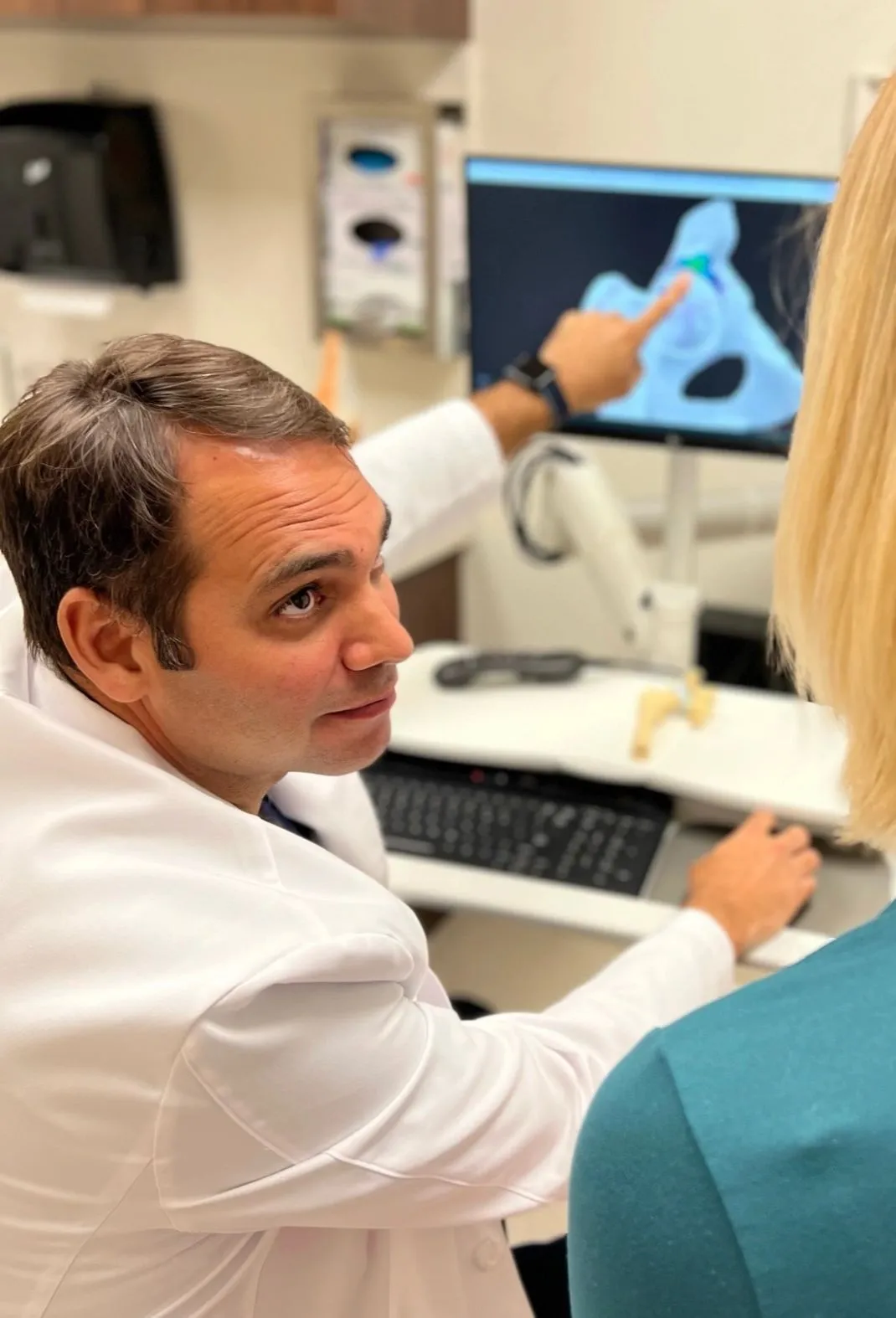
Hip
Impingement (FAI), labral tears, dysplasia, gluteal tendon tears and arthritis. The hip is Dr. Lázaro's sub-specialty.
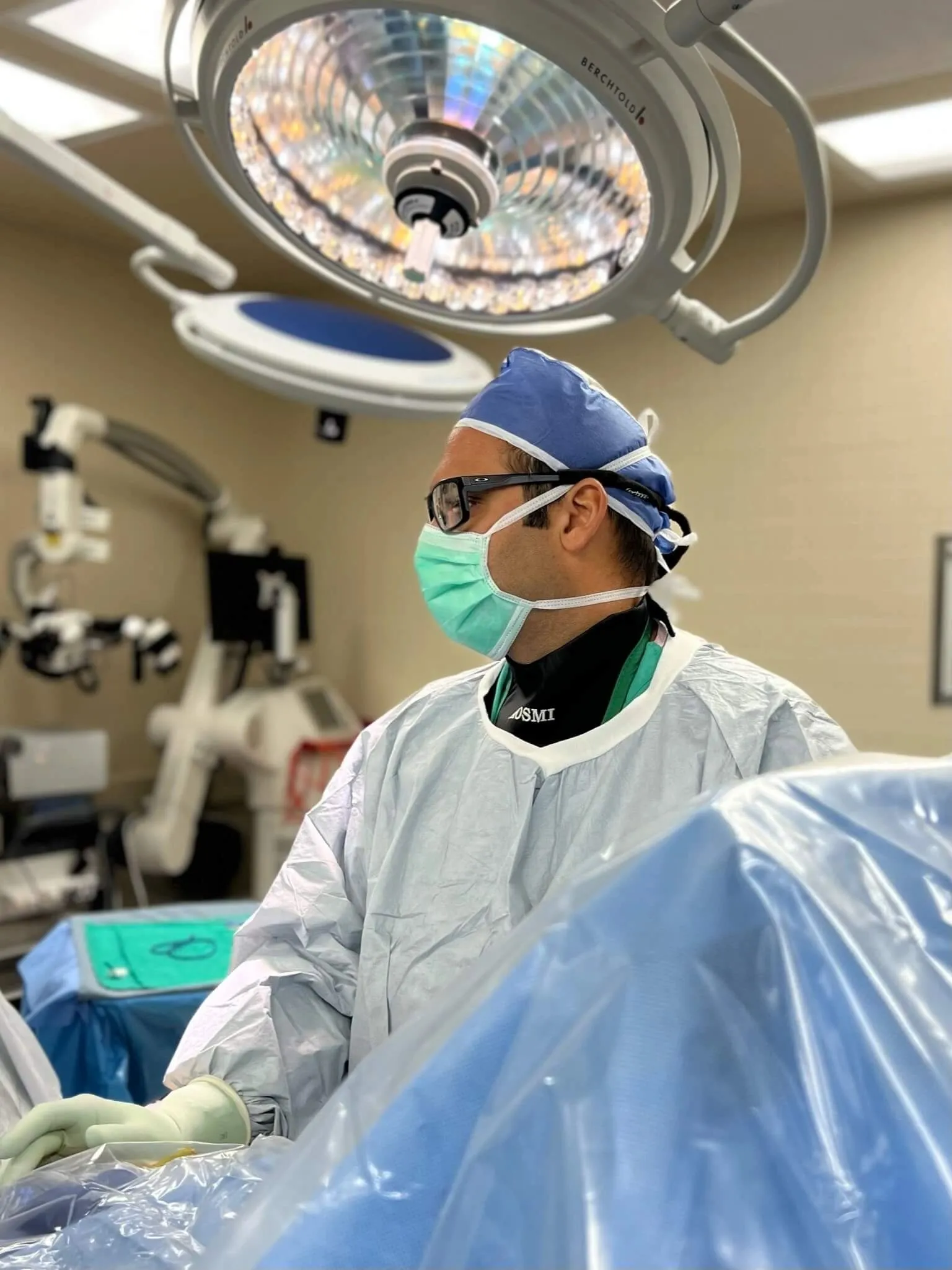
Sports medicine & shoulder restoration
Rotator cuff and labral tears, instability and dislocations, frozen shoulder and arthritis — with options from therapy to arthroscopic surgery.
The shoulder is the most mobile joint in the body. That range of motion lets you reach, throw and lift, but it also makes the shoulder prone to injury from sports, falls, repetitive motion and time.
Shoulder pain can affect your sleep, your work and simple tasks like combing your hair or reaching a high shelf. Pinpointing the exact cause makes it possible to choose the right treatment.
The rotator cuff is a group of tendons that moves and stabilizes the shoulder. A tear can happen from a fall or from wear, causing pain and weakness when lifting the arm.
The labrum is a ring of cartilage that deepens the shoulder socket. SLAP tears affect the top of the labrum; Bankart tears usually happen with a dislocation.
The shoulder slips fully or partially out of its socket. After the first time, it can stay loose and slip out again with certain movements.
The tendons and bursa become irritated as they rub under the acromion. It causes pain when raising the arm overhead and when sleeping on that side.
The shoulder capsule becomes inflamed and stiff, severely limiting motion. It is more common in people with diabetes or thyroid conditions.
Occur at the top of the shoulder, where the collarbone meets the shoulder blade, usually from a direct fall onto the shoulder.
Wear of the joint cartilage. It causes deep pain, stiffness and grinding, and can limit daily activities.
Every plan is individual. Whenever appropriate, we start with the least invasive treatment and only recommend surgery when it can truly help you.
Step 1 · Non-operative
Many shoulder problems improve with therapy and inflammation control.
Step 2 · Joint preservation
Aims to repair injured structures and restore stability and strength.
No. Many partial or wear-related tears improve with physical therapy and other non-operative treatments. Surgery is considered for acute tears from an injury, tears that keep causing pain or weakness, and depending on your age and activity level.
It is important to be evaluated, even if the shoulder went back into place. A dislocation can injure the labrum, bone or rotator cuff, and young, active people have a higher risk of it happening again.
It is a condition in which the shoulder capsule becomes inflamed and stiff. It is usually treated with physical therapy, pain control and sometimes injections. For cases that do not improve, there are surgical options to release the stiffness.
Lying down can increase pressure on inflamed tendons and bursa. Night pain is common with rotator cuff problems and deserves an evaluation if it persists.
This content is educational and does not replace a medical evaluation. Every case is different: diagnosis and treatment are determined during your visit.
Impingement (FAI), labral tears, dysplasia, gluteal tendon tears and arthritis. The hip is Dr. Lázaro's sub-specialty.
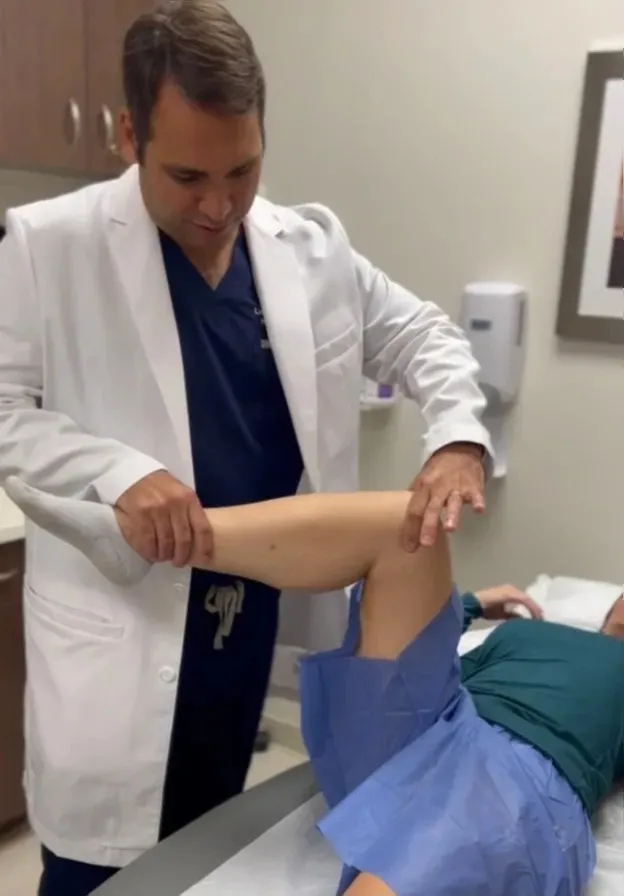
Ligament injuries (ACL), meniscus tears, cartilage damage, kneecap instability and arthritis — from non-operative care to replacement.
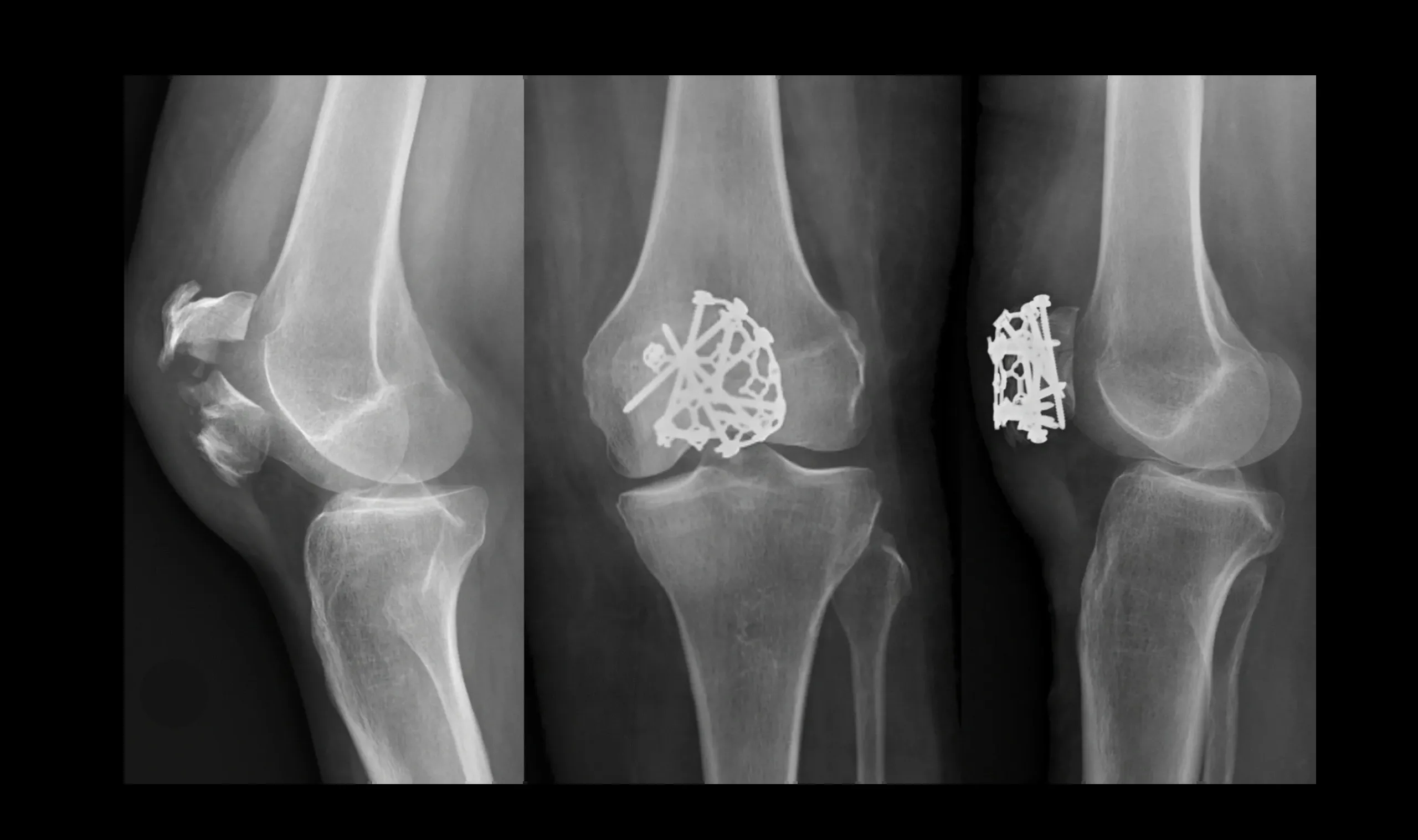
Hip, knee, shoulder, collarbone, elbow, wrist and ankle fractures and stress fractures in athletes, with non-operative care or surgical fixation (ORIF).
New patients are welcome. Book online, call us, or message us on WhatsApp — we reply during office hours.