
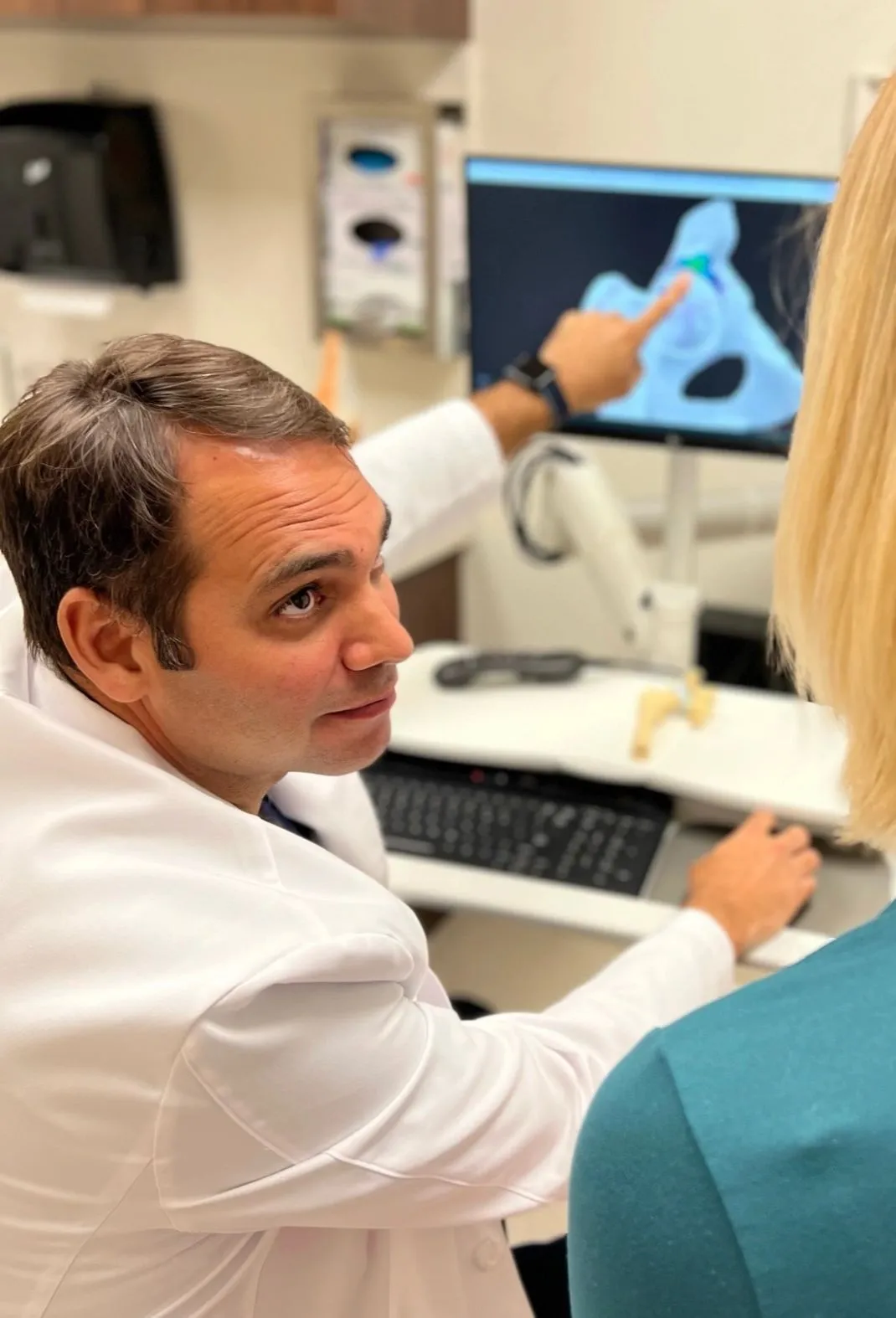
Hip
Impingement (FAI), labral tears, dysplasia, gluteal tendon tears and arthritis. The hip is Dr. Lázaro's sub-specialty.
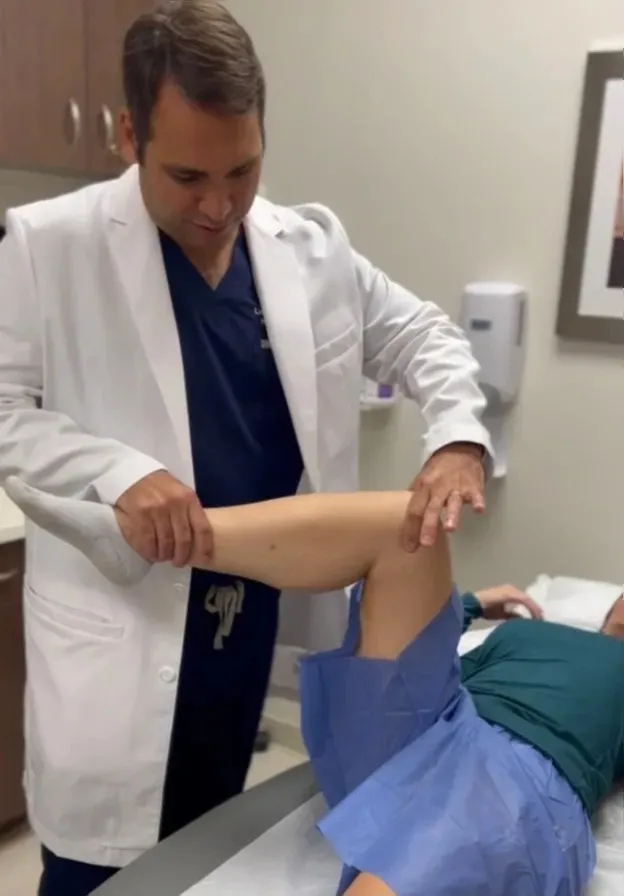
Sports medicine & knee restoration
Ligament injuries (ACL), meniscus tears, cartilage damage, kneecap instability and arthritis — from non-operative care to replacement.
The knee is one of the hardest-working joints in your body: it helps you walk, climb stairs, run, jump and change direction. That is why it is commonly injured in sports, with a misstep or with wear over the years.
An accurate diagnosis is key. Some injuries improve with therapy and strengthening; others, such as certain ligament or meniscus tears, may need repair to protect the knee in the long run.
Usually happen when pivoting, stopping suddenly or landing from a jump. A “pop”, rapid swelling and a feeling that the knee gives way are common.
Often caused by a direct blow to the front of a bent knee, such as in a car accident or a fall. They can cause pain and instability.
Affect the inner side of the knee, usually from a blow or an inward twist. Many heal with a brace and rehabilitation.
The menisci are cartilage “cushions” between the bones. A tear can cause joint-line pain, swelling, clicking or locking.
Damaged areas in the cartilage lining the bones. They can cause pain, swelling and clicking, and raise the risk of arthritis if not addressed.
The kneecap slips out of its groove (dislocation) or feels loose. It is more common in young, active people and can recur if untreated.
Pain around or behind the kneecap that worsens with stairs, squatting or prolonged sitting. It usually improves with strengthening and activity changes.
Progressive wear of the cartilage. It causes pain, stiffness and swelling, especially when walking or after being inactive.
Every plan is individual. Whenever appropriate, we start with the least invasive treatment and only recommend surgery when it can truly help you.
Step 1 · Non-operative
Many knee conditions improve with a good rehabilitation plan and pain control.
Step 2 · Joint preservation
Aims to repair what is injured and protect your own joint.
Step 3 · Joint replacement
When arthritis is advanced and limits your daily life.
Not always. The decision depends on your activity level, your goals, how stable the knee is and whether there are other injuries. Reconstruction is often recommended for active people and athletes; others can be managed with rehabilitation.
It depends on the type and location of the tear. When possible, repair is preferred because the meniscus helps protect the cartilage. Some tears cannot be repaired, and only the damaged part is trimmed.
It is minimally invasive surgery that uses a camera and small instruments through small incisions to see and treat the inside of the knee.
In many cases, injections help control pain and inflammation, especially with arthritis. There are several options, including biologics such as PRP. Dr. Lázaro will explain which one may be appropriate for you.
When arthritis is advanced, pain limits your daily life and non-operative treatments no longer provide enough relief. If only one part of the knee is worn, a partial replacement may be an option.
This content is educational and does not replace a medical evaluation. Every case is different: diagnosis and treatment are determined during your visit.
Impingement (FAI), labral tears, dysplasia, gluteal tendon tears and arthritis. The hip is Dr. Lázaro's sub-specialty.
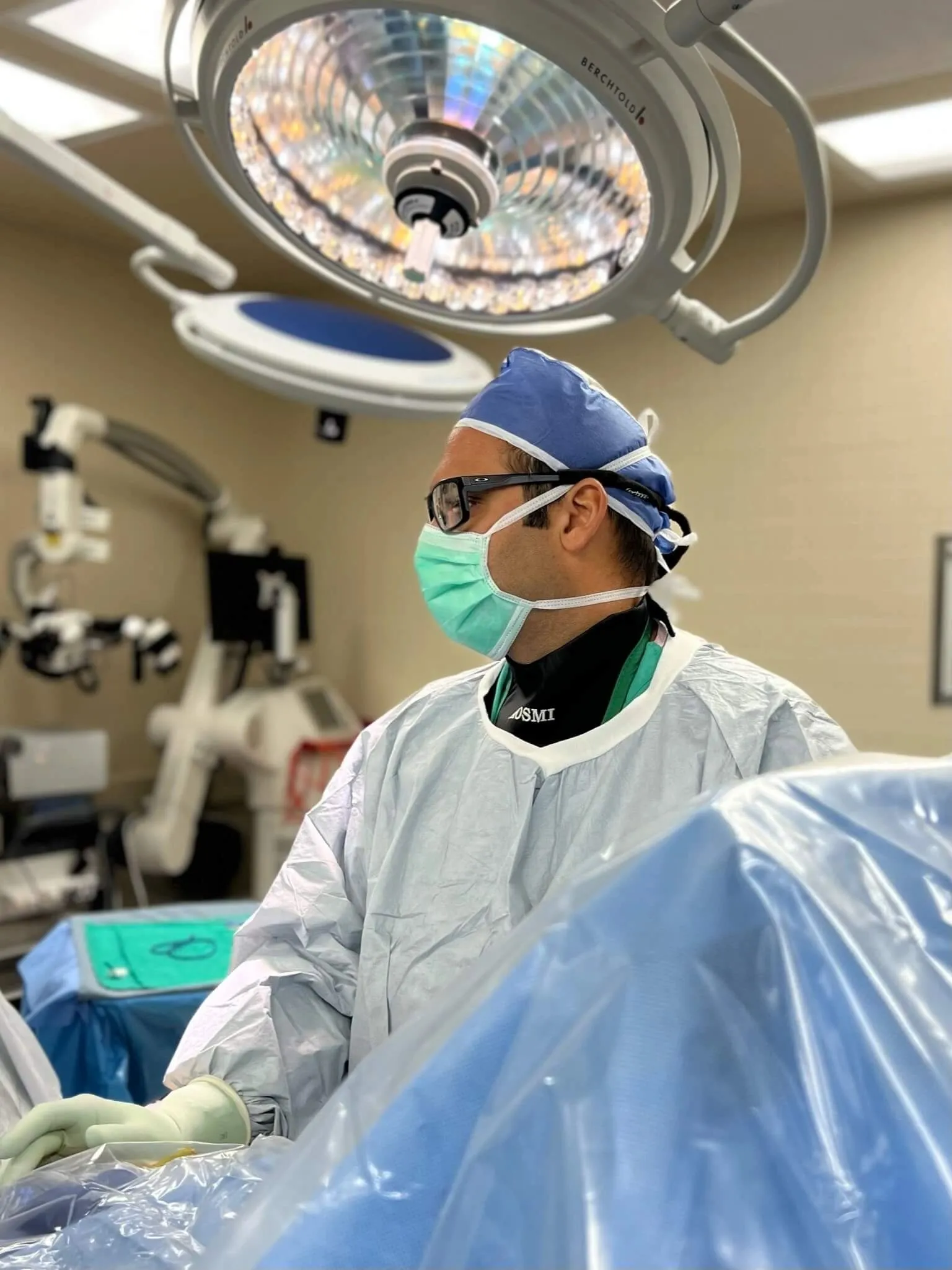
Rotator cuff and labral tears, instability and dislocations, frozen shoulder and arthritis — with options from therapy to arthroscopic surgery.
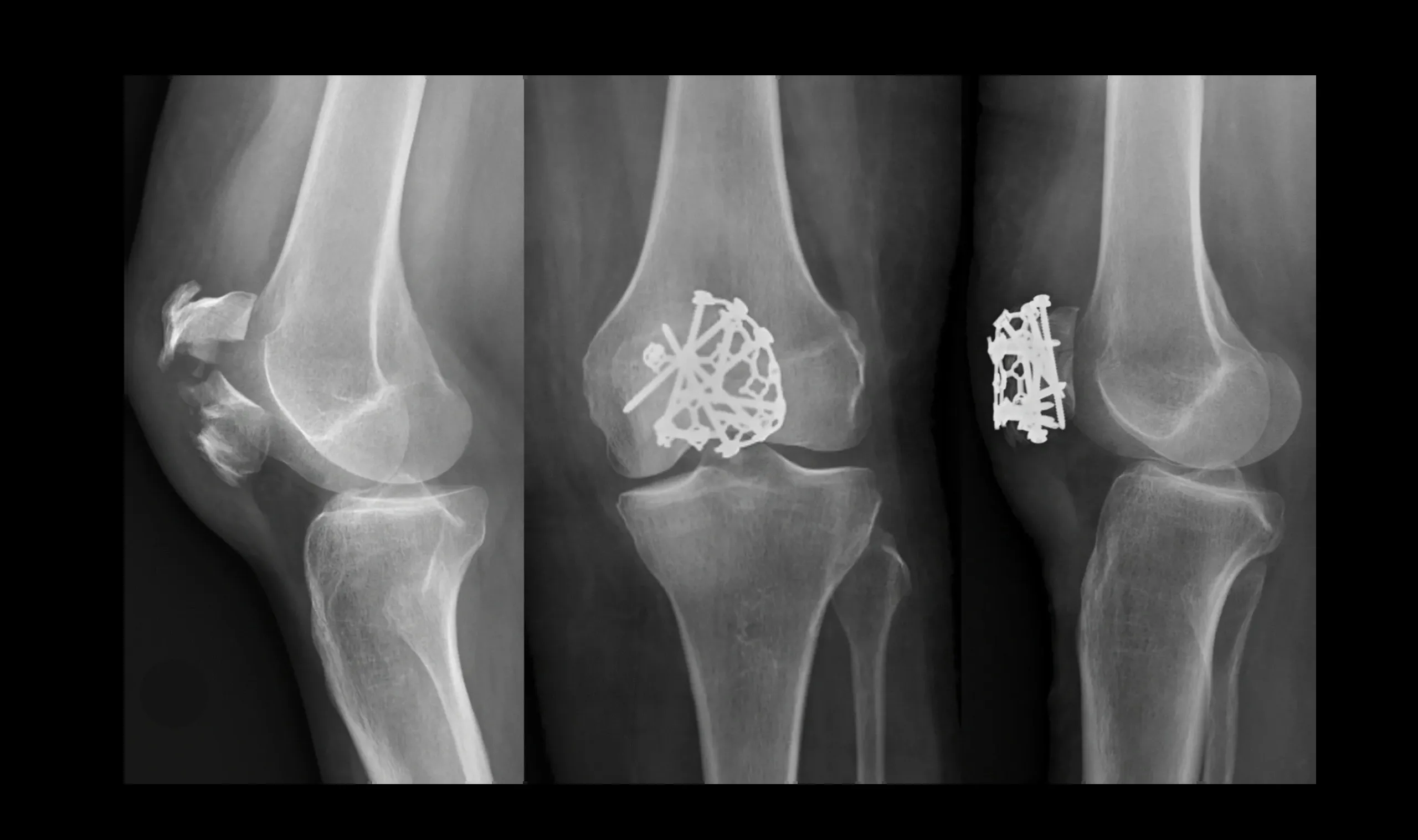
Hip, knee, shoulder, collarbone, elbow, wrist and ankle fractures and stress fractures in athletes, with non-operative care or surgical fixation (ORIF).
New patients are welcome. Book online, call us, or message us on WhatsApp — we reply during office hours.