Hip Pain in Active Young Adults: What Is Femoroacetabular Impingement (FAI)?
Groin or hip pain when you run, sit or play sports could be femoroacetabular impingement (FAI). Learn the symptoms, how it's diagnosed, and the treatment options available.
5 min read
You’re 25, 30 or 40, you stay active, and suddenly you notice a deep ache in your groin every time you run, squat or spend a long time sitting in the car. At first you blame it on a pulled muscle, but the pain doesn’t go away. If that sounds familiar, one cause worth considering is femoroacetabular impingement, better known as FAI or simply “hip impingement.”
In this article we explain what FAI is, why it happens, how it’s diagnosed, and which treatment options exist — from conservative care to hip arthroscopy.
What is femoroacetabular impingement?
The hip is a ball-and-socket joint. The head of the femur (the ball) sits inside the acetabulum (the socket in the pelvis). Around the rim of the socket is a ring of fibrocartilage called the labrum, which helps seal and stabilize the joint.
In FAI, the shape of one or both bones isn’t ideal. As a result, when you bend or rotate your hip, the edge of the femur and the rim of the socket bump into each other earlier than they should. Over time, that repeated contact can irritate or tear the labrum and wear down the joint cartilage.
Types of impingement
- Cam type: the femoral head isn’t perfectly round; there’s a bump of extra bone that catches on the socket when the hip bends. It’s more common in young men and athletes.
- Pincer type: the socket covers too much of the femoral head, so its rim hits the femoral neck.
- Mixed type: a combination of both, which is quite common.
It’s important to know that many people have a cam- or pincer-shaped hip on X-rays and never develop symptoms. That’s why the diagnosis doesn’t rely on an image alone — it depends on your history, physical exam and imaging together.
Common symptoms
FAI usually shows up in active young and middle-aged adults, although it can affect less athletic people too. Typical symptoms include:
- Pain in the groin or front of the hip. Many patients describe it by cupping the side of the hip with their hand in a “C” shape.
- Pain after sitting for long periods, getting in or out of the car, or putting on shoes.
- Discomfort when squatting deeply, running, kicking or pivoting.
- A feeling of stiffness or that the hip doesn’t rotate like it used to.
- In some cases, clicking, locking or catching, especially if the labrum is injured.
The pain may start gradually or after a specific effort, and it often gets worse with activity and better with rest.
Why you shouldn’t ignore it
Impingement is a mechanical problem: as long as the bone shape keeps causing contact, the friction can continue. An early evaluation helps determine whether the labrum or cartilage is damaged and which treatment fits your situation. In some people, progressive cartilage damage has been linked to hip arthritis later in life, although not everyone with FAI will develop it.
How is FAI diagnosed?
A thorough evaluation with a hip specialist usually includes:
- Detailed history: when the pain started, what activities trigger it, which sports you play and what treatments you’ve tried.
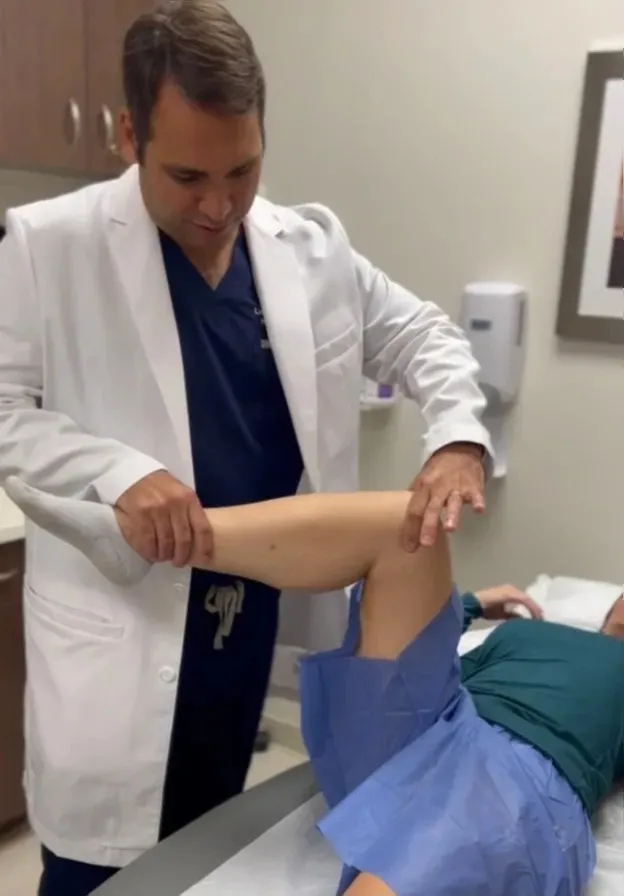
- Physical exam: the specialist moves your hip through different positions. Certain maneuvers, such as flexion with internal rotation, can reproduce the typical impingement pain.
- X-rays: show the shape of the femur and socket and whether there are signs of arthritis.
- MRI: helps evaluate the labrum, cartilage and soft tissues. Sometimes contrast is injected into the joint (an MR arthrogram).
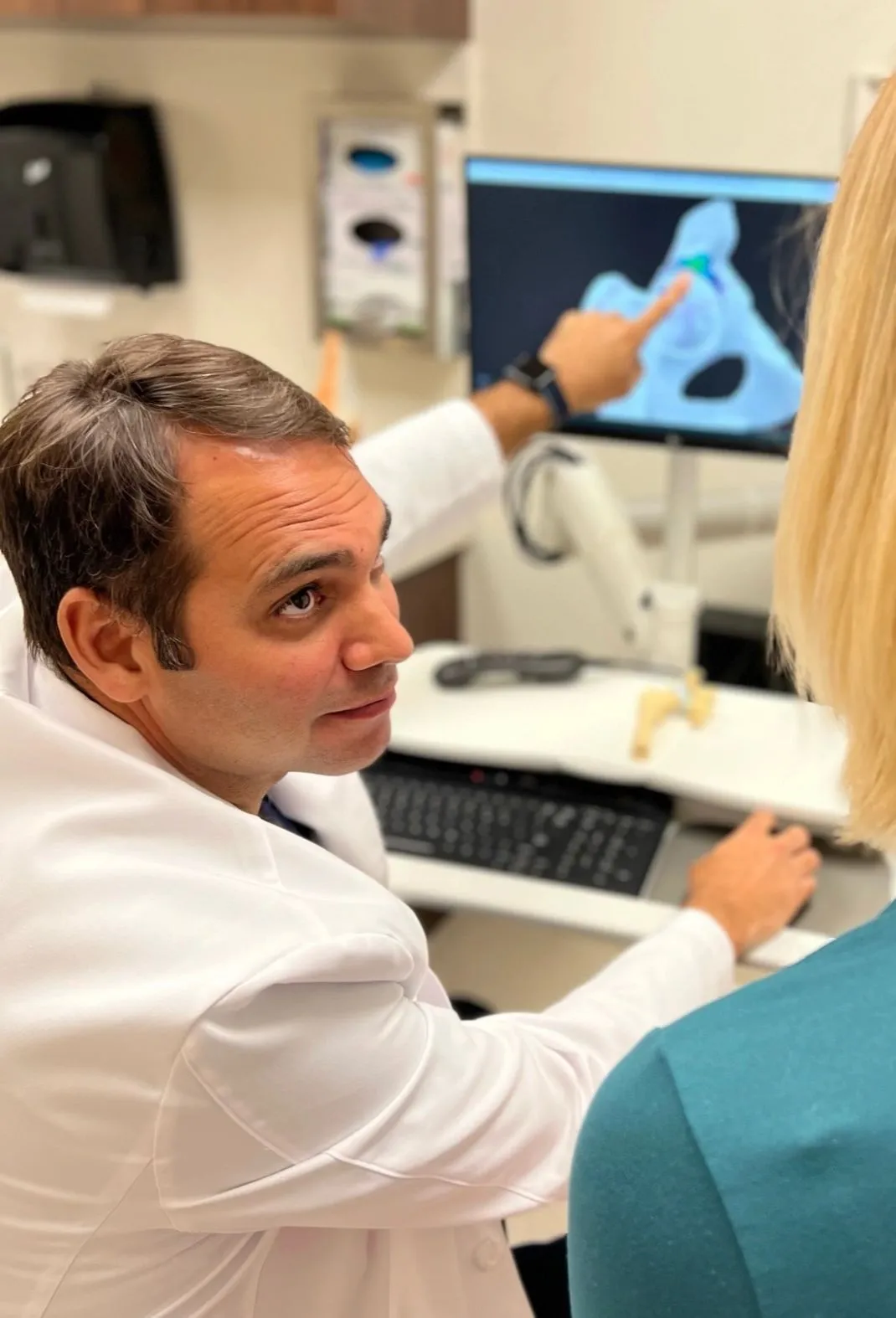
- CT scan in selected cases: useful for surgical planning and understanding the three-dimensional shape of the bone.
An image-guided diagnostic injection into the hip is sometimes used as well. If the pain temporarily improves, it suggests the problem is coming from inside the joint.
Treatment options
Not every patient with FAI needs surgery. The plan depends on your symptoms, activity level, imaging findings and goals.
Conservative treatment
For many people, the first step is non-surgical care:
- Modifying activities that trigger pain, such as deep squats or certain pivoting movements, for a period of time.
- Physical therapy focused on strengthening the glutes and core, improving movement control and working on mobility without forcing the impingement position.
- Anti-inflammatory medication for short periods, if your doctor considers it appropriate.
- Image-guided injections, which can help calm inflammation and confirm the diagnosis.
Hip arthroscopy
When pain persists despite conservative care and imaging confirms impingement as the cause, hip arthroscopy may be considered. It’s a minimally invasive surgery performed through small incisions using a camera. During the procedure, the surgeon may:
- Reshape the bone causing the impingement (on the femur, the socket or both).
- Repair or reconstruct the labrum when it’s torn.
- Address cartilage damage, depending on the case.
Recovery usually includes a period on crutches and a progressive rehabilitation program that may take several months before returning to high-demand sports. Results vary from person to person, and factors such as the amount of arthritis already present play a big role. That’s why careful patient selection is key.
When to see a specialist
We recommend getting evaluated if:
- You’ve had groin or hip pain for more than a few weeks, even with rest.
- The pain keeps you from playing sports, training or doing your daily activities.
- You feel locking, painful clicking or the hip “catching.”
- You’ve already done physical therapy without improvement.
If you had a hard fall or trauma and can’t put weight on your leg, seek emergency care.
Your hip pain has answers
FAI is a common and treatable cause of hip pain in active people. Understanding the problem is the first step to moving with confidence again. Dr. Lázaro specializes in hip preservation and hip arthroscopy and sees patients in San Juan and Dorado, Puerto Rico. If these symptoms sound familiar, book an appointment for a personalized evaluation, or learn more about hip conditions.
This article is for educational purposes and does not replace a medical evaluation. Talk to a specialist about your specific case.