Rotator Cuff Injuries: Symptoms and Treatment Options
Does your shoulder hurt when you lift your arm or at night? Learn what the rotator cuff is, how it gets injured, the symptoms to watch for, and treatment options from physical therapy to arthroscopic repair.
4 min read
Your shoulder hurts when you reach for something on a high shelf, when you put on a shirt or, worse, when you lie on that side at night. Maybe it started after a fall, after an intense day at the gym, or for no obvious reason at all. One of the most common causes of this kind of pain is a rotator cuff injury.
In this article we explain what the rotator cuff is, how it gets injured, which symptoms to watch for and what treatment options are available.
What is the rotator cuff?
The rotator cuff is a group of four muscles and their tendons that surround the shoulder joint: the supraspinatus, infraspinatus, teres minor and subscapularis. Together they keep the head of the humerus (the ball of the shoulder) centered in the socket and let you lift and rotate your arm with strength and control.
When one of these tendons becomes inflamed, worn or torn, the shoulder loses part of that stability and strength — and pain follows.
Types of rotator cuff injuries
Tendinopathy and bursitis
This is irritation or wear of the tendon, often accompanied by inflammation of the bursa, a small fluid-filled sac that helps tissues glide. It’s common in people who perform repetitive overhead movements, such as swimmers, volleyball and tennis players, painters or construction workers.
Partial-thickness tear
The tendon is damaged but not torn all the way through.
Full-thickness tear
The tendon is torn completely through and, in some cases, pulls away from the bone. This can happen in two ways:
- Acute or traumatic: after a fall on the arm, lifting something very heavy suddenly, or with a shoulder dislocation.
- Degenerative: the tendon wears down over the years. These tears become more common as we age, and many people have degenerative tears without knowing it.
Common symptoms
- Pain on the outer side of the shoulder, sometimes radiating down the arm.
- Pain when raising the arm out to the side or overhead.
- Night pain, especially when lying on the affected shoulder.
- Weakness when lifting or rotating the arm — for example, trouble combing your hair or reaching behind your back.
- A crackling or clicking sensation when moving the shoulder.
- With large or acute tears, a sudden inability to lift the arm.
How is it diagnosed?
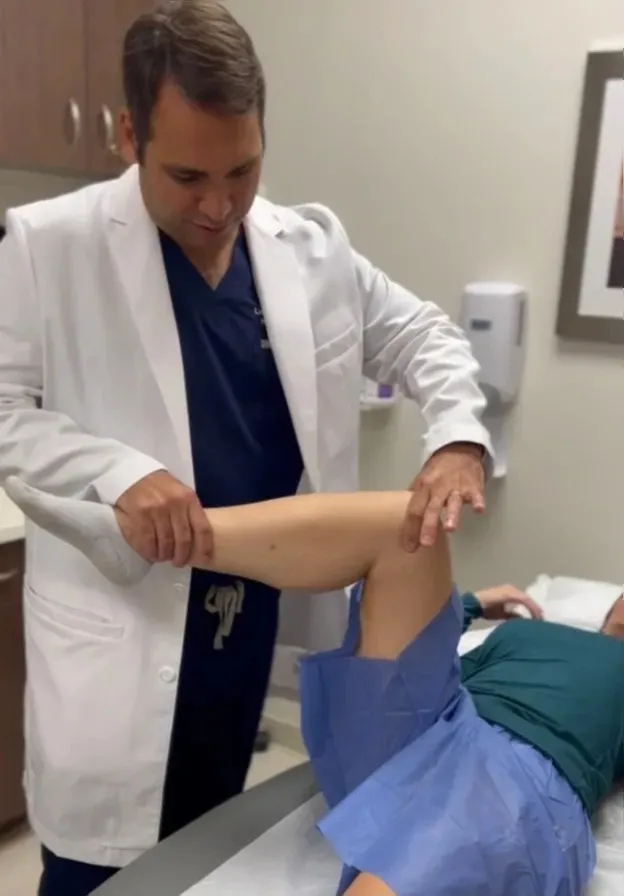
- History and physical exam: the specialist evaluates your range of motion, your strength in different directions and specific tests for each rotator cuff tendon.
- X-rays: they don’t show tendons, but they help evaluate bone, arthritis and other causes of pain.
- MRI or ultrasound: these show the tendon, the size of the tear, whether it has retracted and the quality of the muscle — information that’s important when deciding on treatment.
Treatment options
Treatment depends on the type of injury, whether it was traumatic or degenerative, your age, your activity level and how much it affects your daily life.
Non-surgical treatment
Many rotator cuff injuries — especially tendinopathy, partial tears and many degenerative tears — are initially managed without surgery:
- Activity modification: temporarily avoiding the movements that trigger pain, without fully immobilizing the shoulder.
- Physical therapy: the cornerstone of treatment. It focuses on restoring motion, strengthening the rotator cuff and the muscles that stabilize the shoulder blade, and improving shoulder mechanics.
- Anti-inflammatory medication for short periods, as directed by your doctor.
- Injections: a corticosteroid injection can relieve pain to make therapy easier, although it’s used sparingly. Some biologic therapies, such as platelet-rich plasma (PRP), are also used in selected cases; the evidence on their benefit is still evolving.
Surgery: rotator cuff repair
Surgery may be recommended when:
- There’s an acute full-thickness tear after an injury, especially in active people.
- Pain and weakness don’t improve after an adequate period of non-surgical treatment.
- The tear is large or at risk of progressing and becoming harder to repair.
Today, most repairs are performed arthroscopically, through small incisions using a camera. The surgeon reattaches the tendon to the bone using anchors and sutures.
Recovery takes patience: it generally includes several weeks in a sling and a physical therapy program that advances in stages over several months. Following the rehabilitation plan is as important as the surgery itself. For very large or long-standing tears, there are other surgical alternatives your specialist can discuss with you.
When to see a specialist
We recommend an evaluation if:
- You had a fall or injury and now can’t lift your arm or it feels very weak.
- Your shoulder pain has lasted more than a few weeks despite rest.
- The pain frequently wakes you up at night.
- You’ve noticed a loss of strength or motion in your shoulder.
If you have a visible deformity, suspect a dislocation, or have shoulder pain together with chest pain or shortness of breath, seek emergency care right away.
Use your shoulder with confidence again
Rotator cuff injuries are very common, and there are several treatment options. An accurate diagnosis helps you choose the right path for you. Dr. Lázaro, a board-certified orthopedic surgeon with fellowship training in sports medicine, evaluates and treats shoulder injuries in San Juan and Dorado, Puerto Rico. Book an appointment or learn more about shoulder conditions.
This article is for educational purposes and does not replace a medical evaluation. Talk to a specialist about your specific case.